Chapter 1 – The Little Town of Ura

Chapter 1 – The Little Town of Ura

The story begins in Ura.

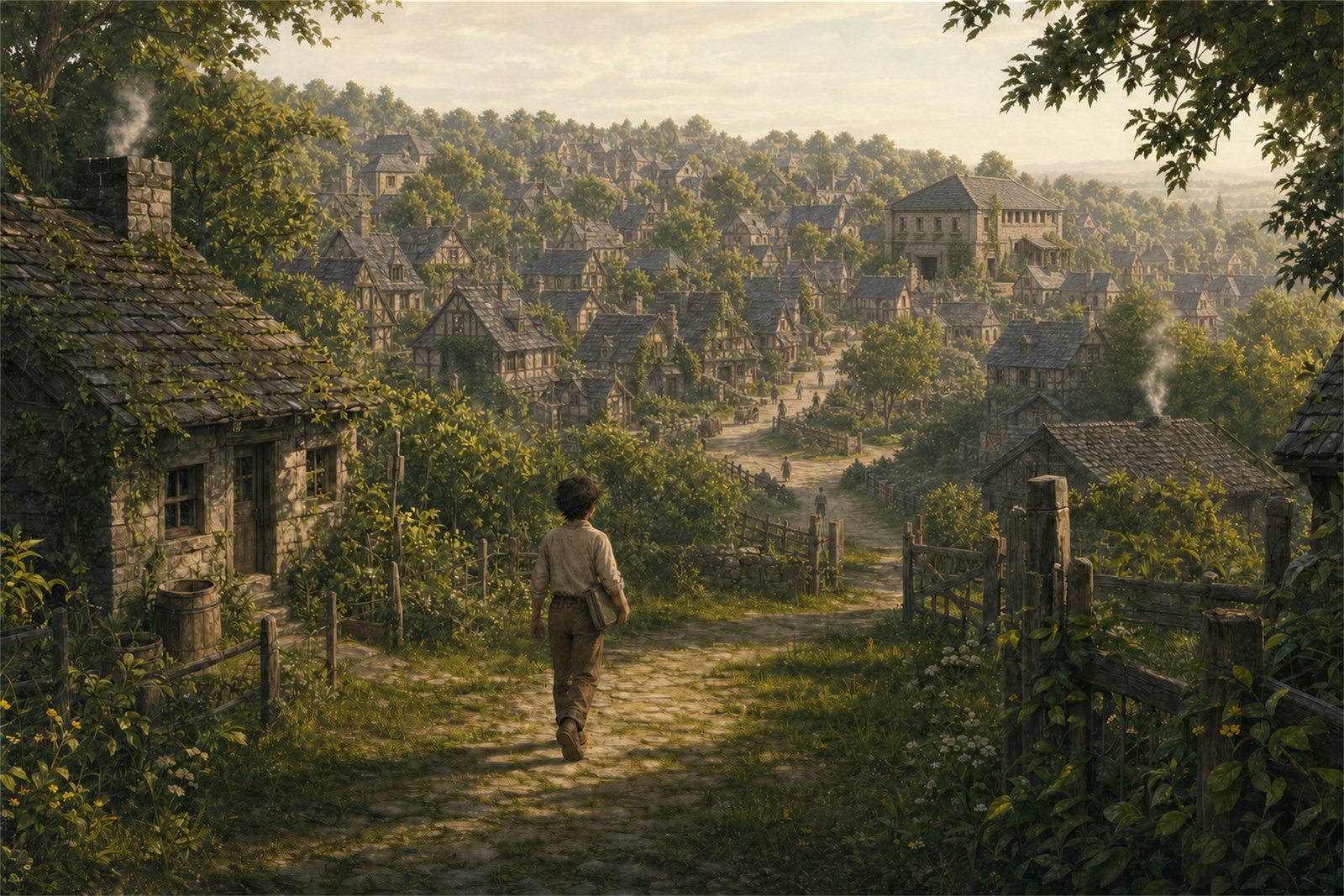
Ura lies in the middle of a wide forest, where gentle wooded hills lean against one another and little brooks chatter between the trees as if they had much to tell each other. Not a great city, not a capital – but a place that lives because it likes living. Roofs of dark slate nestle together like sleeping cats, narrow lanes wind cheerfully between timber framing and stone, and over everything lies the smell of wood smoke, damp leaves and fresh bread. Whoever walks through Ura in the morning is in no hurry. Ura is never in a hurry.

In the morning, the town wakes slowly and in good spirits. Schoolchildren hop across the cobblestones, satchels swinging, voices tumbling over one another – laughter, little quarrels, big plans for the afternoon. They know every loose slab in the path, every ledge you can jump onto, every shortcut that isn't really one but feels better anyway. The traders sleepily push open their shops. Soon the market will be full: bread still warm from the oven, dried herbs in little bundles, all manner of small metal parts whose purpose nobody knows and which sell so well precisely for that reason. A baker's wife calls a "the Twelve be with you" after someone, half out of habit, half out of warmth, and means above all: have a lovely day.

Thin smoke rises from the old stables at the edge of town. Where draught animals once snorted, steam-driven wagons are being fired up today – with bulky boilers, polished valves and a wheezing that sounds as if they themselves were still a little drowsy. They smell of oil and hot iron, and children still stop to count the hisses, while the old folk shake their heads and look anyway. They always look. Something new arriving in an old town is, after all, a small festival.

The guards of the Inquisition have long been part of the picture too. Their armour is dull, mended here and there, and they lean against the walls more often than they patrol. The older folk tell that it was once different – in lowered voices and with that pleasant shiver that belongs to a good story. But the children know the guards only as the friendly-grumpy men who shout "no running!" and give you a secret nod when you run anyway.

Across the market, you can see the ruins. Nobody knows exactly how old they are, and on a morning like this, nobody asks. They belong to Ura like the hills and the forest. But whoever looks closely senses that there must once have been another time here – a greater, more splendid one, with halls and glory, of which only the telling remains today. In the middle of the old gardens stands a half arch of a stone that seems foreign and familiar at once, entwined by ancient wandering olive trees. If you look very closely, the pattern in the stone repeats within itself, smaller and smaller, like a friendly joke the arch plays on the eye. The children climb on it when the gardeners aren't looking. To them, it is no riddle. To them, it is the best lookout in the whole town.

Two old families have shaped Ura, and you can still recognise them today. The Stalait, stocky and skilful, with the hands of stonemasons – they built the first houses around the ruins, in the beautiful dream of one day matching the old splendour. And the Bamlait, taller, stronger, come from the deep forests: wandering clans who carried their gardens with them and brought something to bloom wherever they rested. For a long time they searched for a place to stay. For one of their clans, Ura became that place. Where stone and forest meet, there is sometimes friction – but mostly something beautiful grows from it: a garden against an old wall, a timbered house with herb pots on the sill.

That is Ura: old and light at the same time, a little town that wears its stories like a comfortable, slightly oversized garment. And west of the arch, in a small cottage at the forest's edge, on this bright morning a boy sleeps deeply and blissfully, blanket pulled up to his nose, only his feet poking out. He is dreaming something especially lovely right now – you can tell by his contented face – and does not yet suspect that the sun is already far too high.

He is about to oversleep. As so often.

His name is Arlon.

Continue to Chapter 2 – A Daydreamer's Morning →